Permissions by role, store by store:configuration and Sales Engineer training
Designed with Carrefour, ICA and Conad so each user sees only what their job needs.
- ~25
Sales Engineers trained, from France, Sweden, Italy and the US
Count · First online session, with the Product Owner - 0
Super admins: roles are functional, combinable and not hierarchical
Design decision · Configuration model - Very positive
Feedback after the training: fast role assignment, a lean user registry
Qualitative · Jira tasks and survey
In shortStore roles change often, so creating users and assigning roles had to be quick and GDPR compliant. With the client chains I designed functional, combinable roles with no super admin, then trained about 25 Sales Engineers with the Product Owner. They then helped clients move to Plaza.
Start from the jobs, not the hierarchy
Each user had to see only the functions they need, and roles like store operators change often, so creating users and assigning roles had to be quick and GDPR compliant. With the client chains I designed a permissions model based on what people do: roles that are not hierarchical, can be combined and include no super admin.
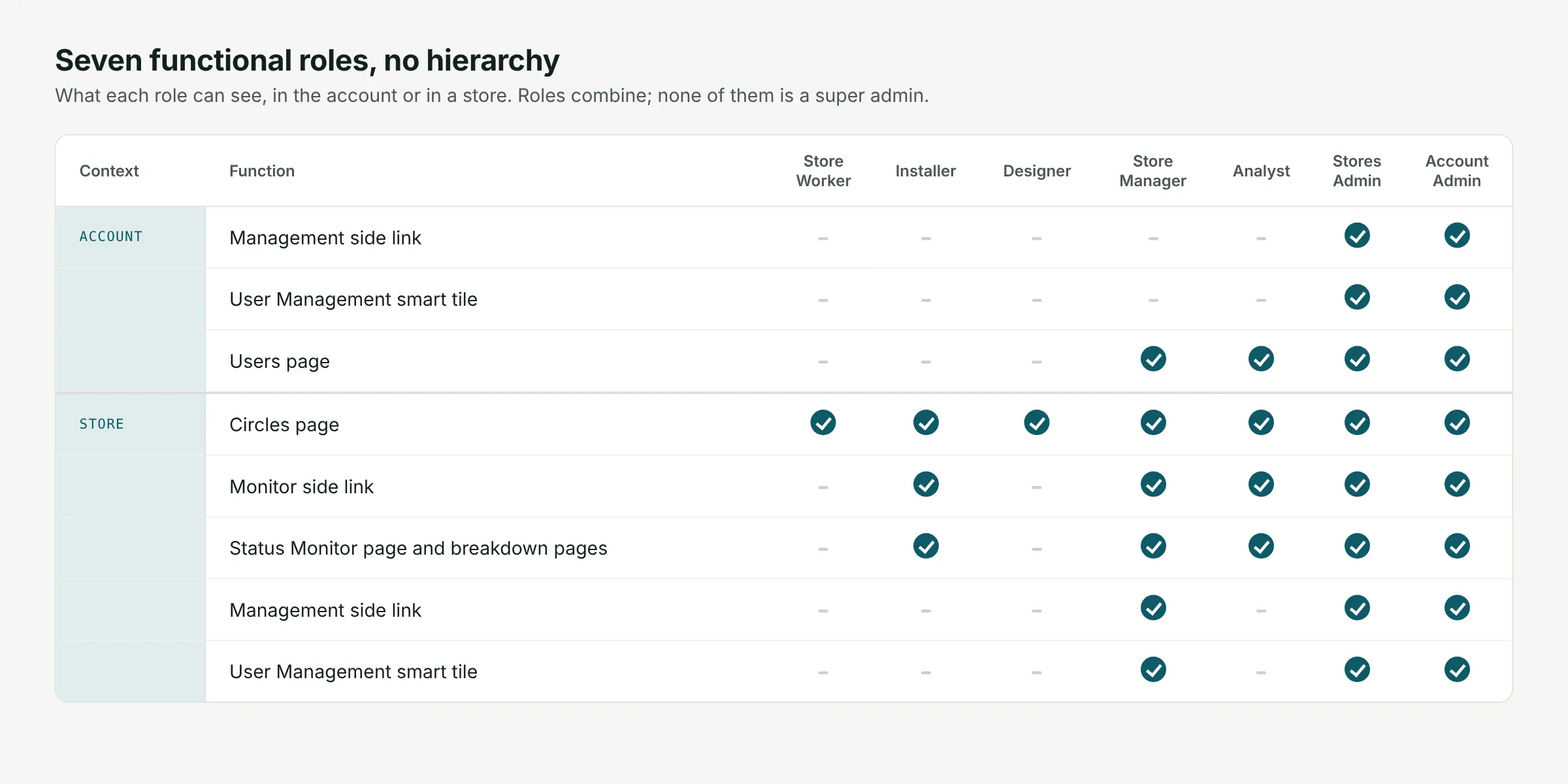
Text version: Roles matrix
Seven functional roles, no hierarchy. Roles combine; none of them is a super admin.
| Function | Store Worker | Installer | Designer | Store Manager | Analyst | Stores Admin | Account Admin |
|---|---|---|---|---|---|---|---|
| Management side link | No | No | No | No | No | Yes | Yes |
| User Management smart tile | No | No | No | No | No | Yes | Yes |
| Users page | No | No | No | Yes | Yes | Yes | Yes |
| Function | Store Worker | Installer | Designer | Store Manager | Analyst | Stores Admin | Account Admin |
|---|---|---|---|---|---|---|---|
| Circles page | Yes | Yes | Yes | Yes | Yes | Yes | Yes |
| Monitor side link | No | Yes | No | Yes | Yes | Yes | Yes |
| Status Monitor page and breakdown pages | No | Yes | No | Yes | Yes | Yes | Yes |
| Management side link | No | No | No | Yes | No | Yes | Yes |
| User Management smart tile | No | No | No | Yes | No | Yes | Yes |
Fix what blocks access first
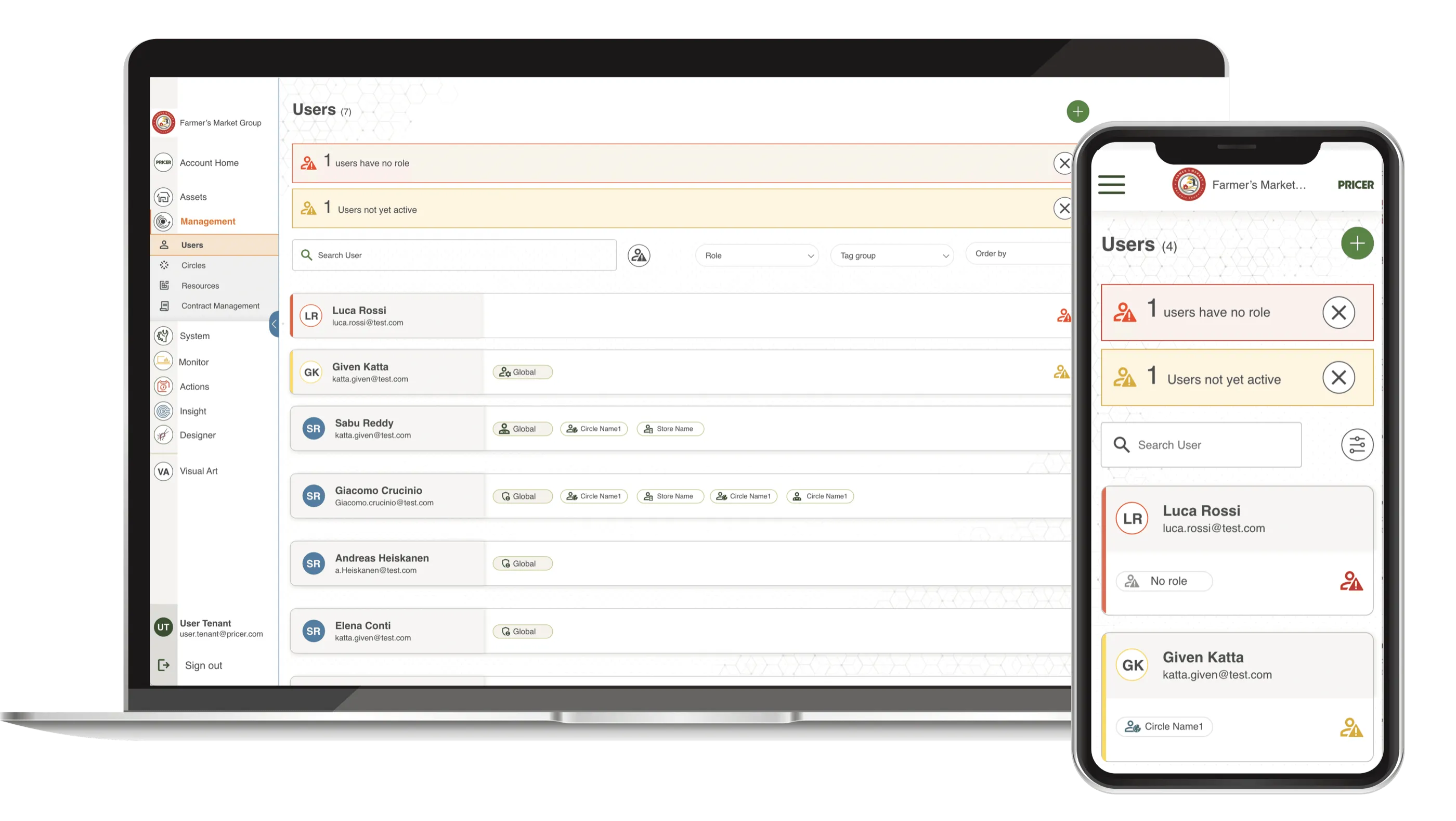
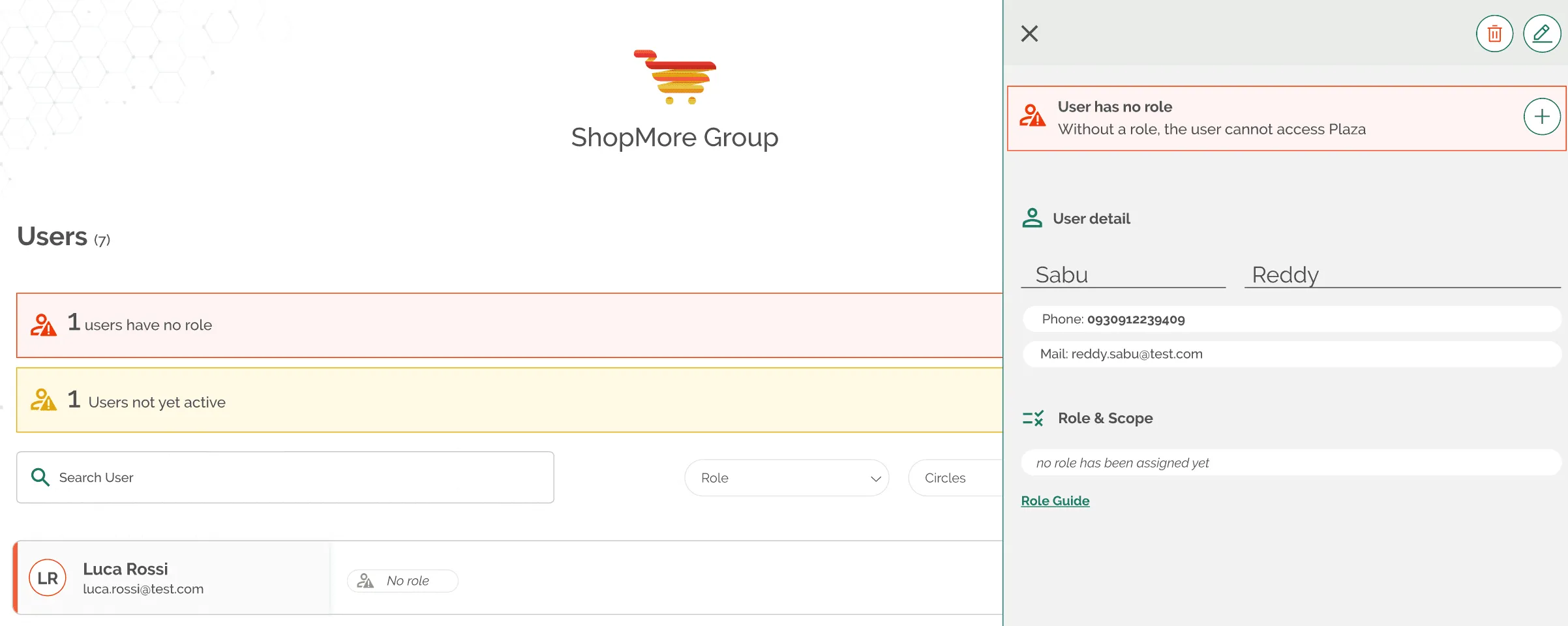
On the Users page two alert boxes sit above the list. Red counts the imported users without a role, yellow the users who have not yet confirmed their email. The list is sorted by severity, so the users who cannot access Plaza come first. In the side panel, a shortcut adds the missing role or resends the confirmation email.
Many roles, each with its own scope
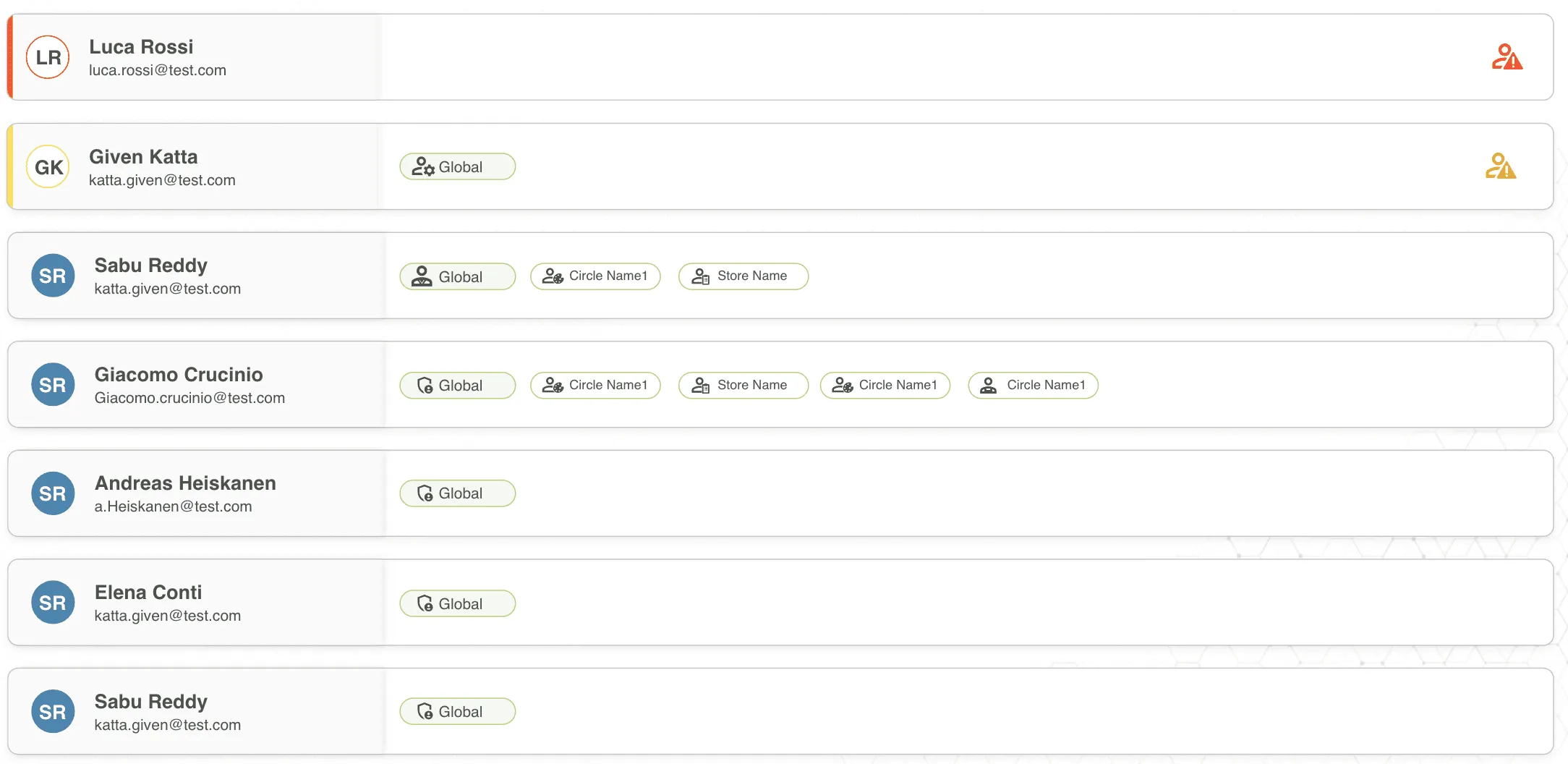
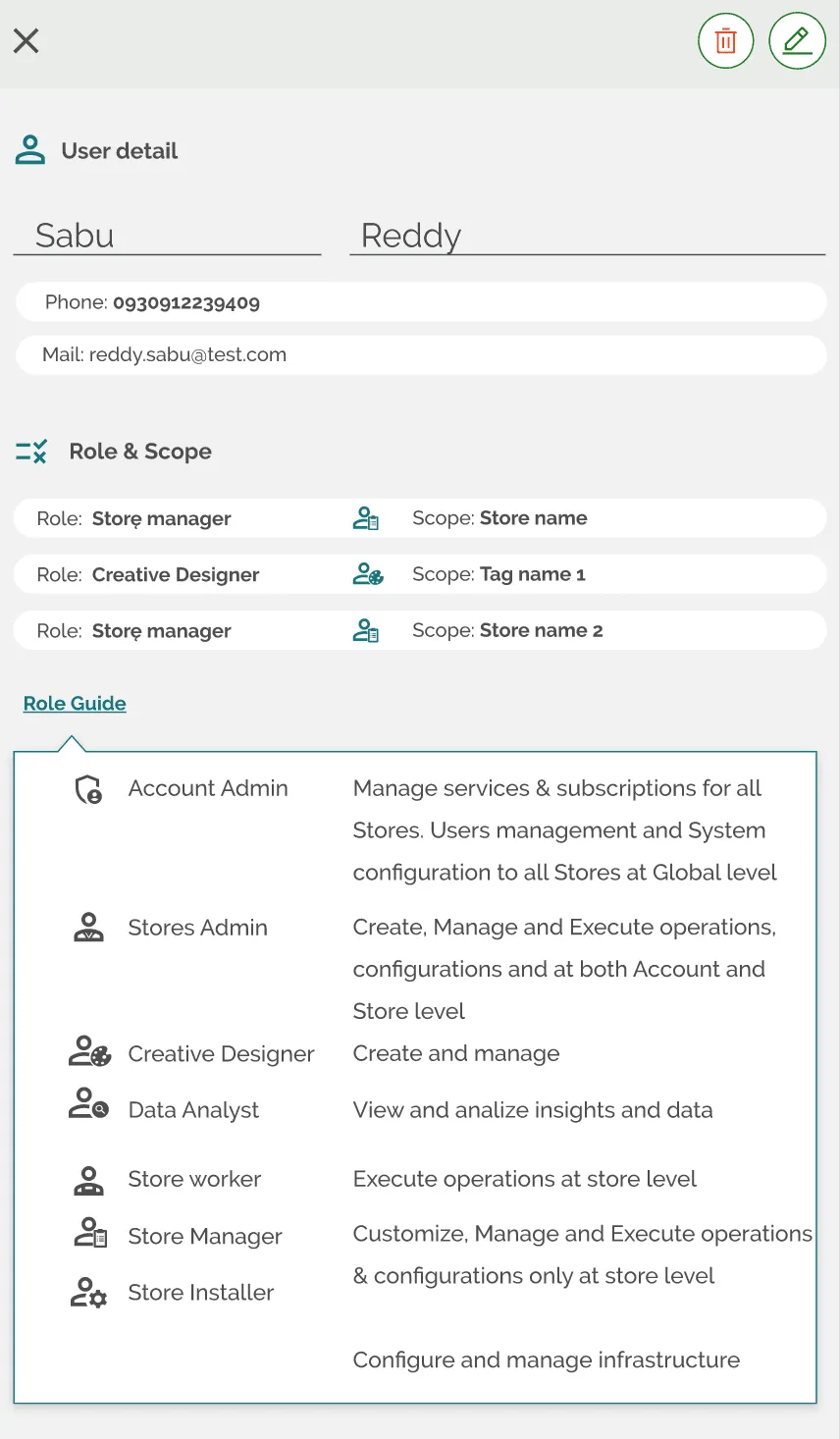
Each user can hold several roles, and each role applies to a store or to a group of stores. Each user needs at least one role, with a scope for that role. The role picker shows an icon and a name, with a role guide one click away. To set the scope, whoever assigns the role can search for a store or pick a circle, the Plaza feature that groups stores.
Group stores in circles
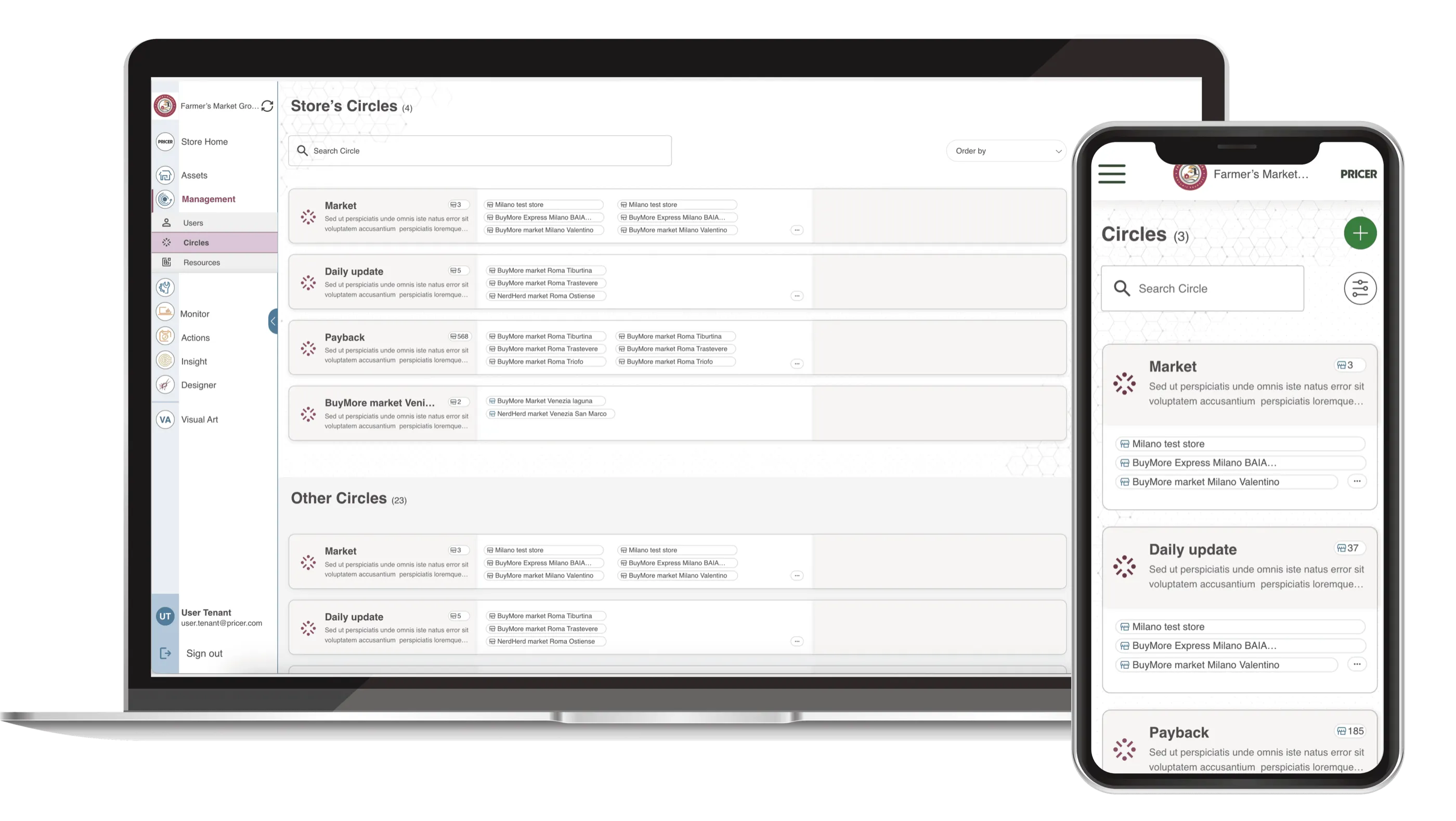
The old tags became circles, so a group of stores can also be used to assign roles. Each circle shows its name, the number of stores and a short description, and opens in a side panel with the full list of members, and the page works on the phone too.
Train the people who install it
Together with the Product Owner I ran a first online session for about 25 Sales Engineers from France, Sweden, Italy and the US. We worked through concrete cases: creating a user in several steps, assigning roles, keeping a GDPR-compliant user registry, activating accounts by email and managing them through Pricer accounts.
Collect feedback where they work
Feedback came through Jira tasks and a survey after the training: clear, useful, with an impact on daily activities. The team could assign roles faster and keep the user list easier to manage, and clients needed less time and fewer requests to customer support. Sales Engineers, who had met big changes with little enthusiasm, then helped clients move from the on-premises platform to Plaza.
A configuration model works when the people who install it can explain it to the client.
Hand it over
I closed the work with a handover deck and a prototype for the team. The prototype includes the mobile version too, since the application is expected to be responsive.